
Renters' Rights Act 2025
— A Simple Guide
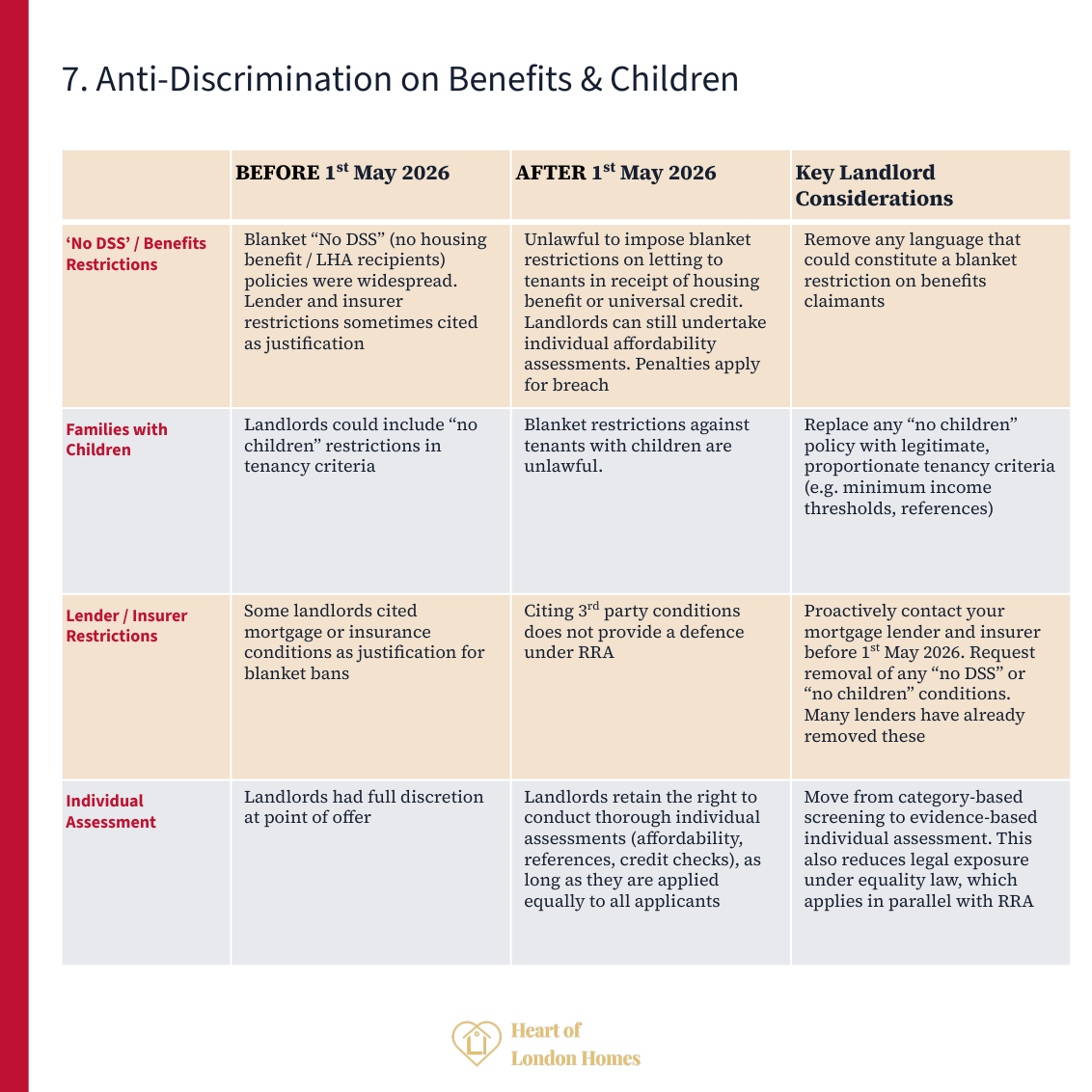
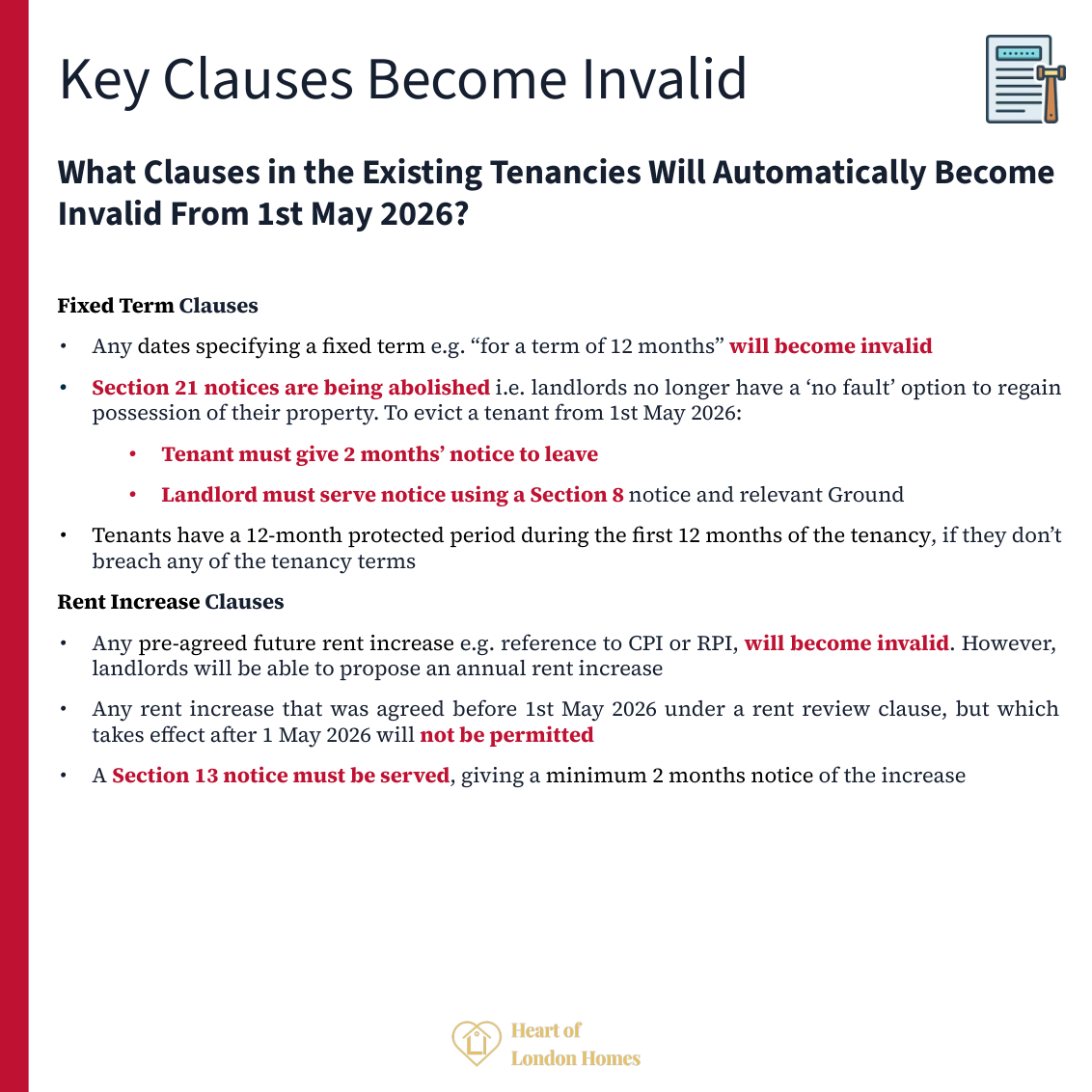
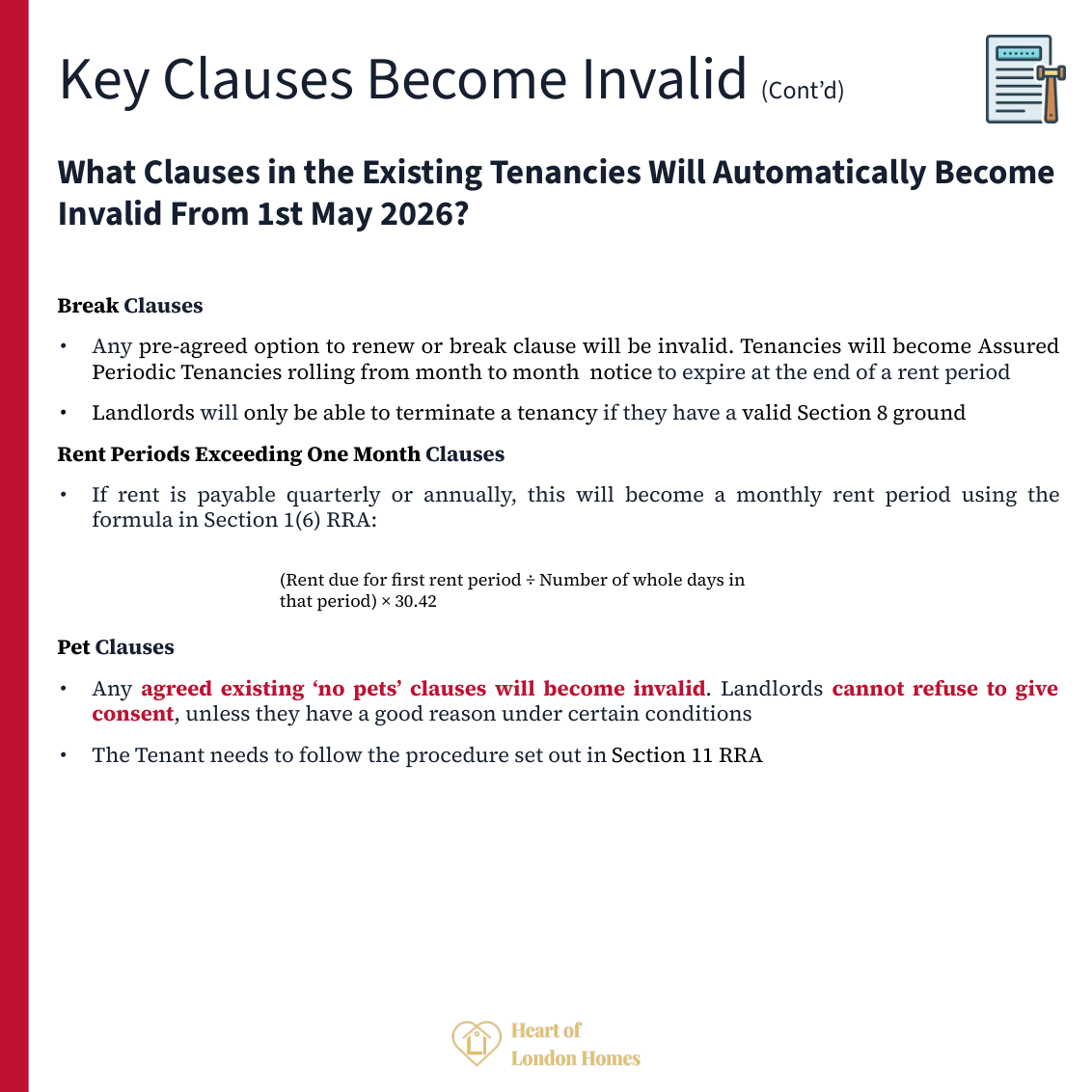
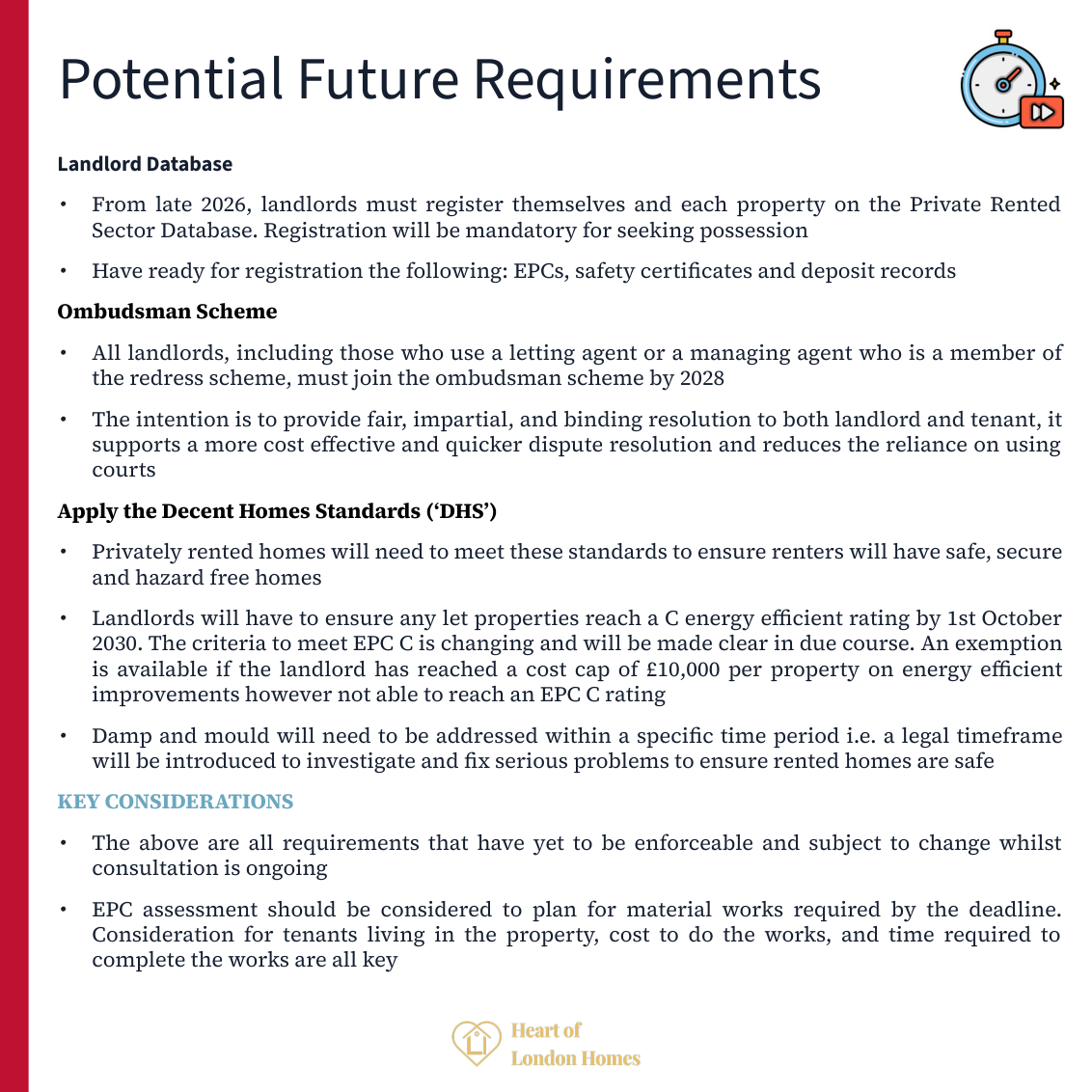
A 16-page visual guide covering transition planning, key rule changes, and which tenancy clauses become invalid from 1 May 2026.
Want us to handle the transition for you?
We manage properties for London landlords at 6% — no exit fees, no traps. The Renters' Rights Act changes are included.
1 of 16
Key Questions Answered
The most common questions London landlords are asking about the Renters' Rights Act 2025.
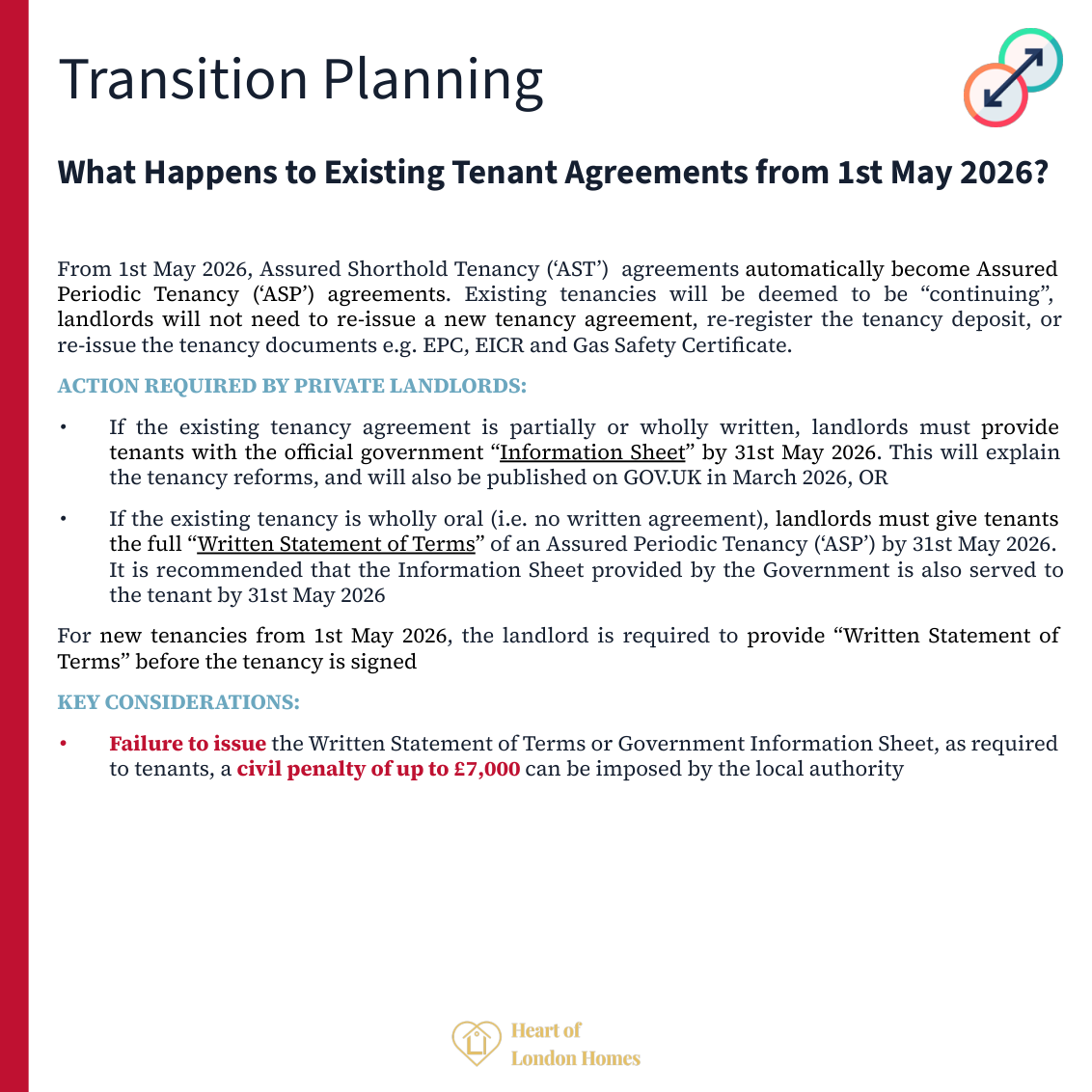
What happens to existing tenancy agreements from 1 May 2026?
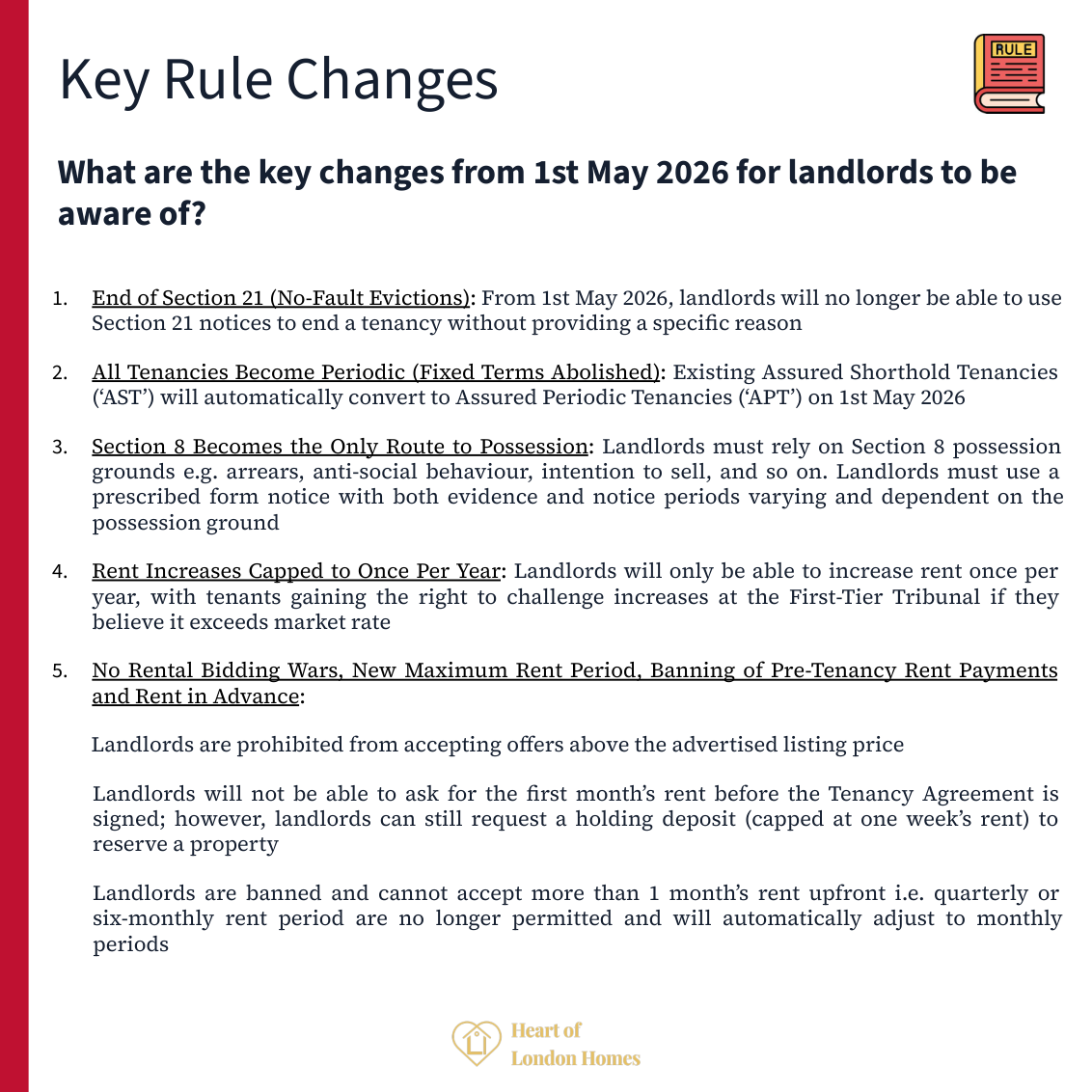
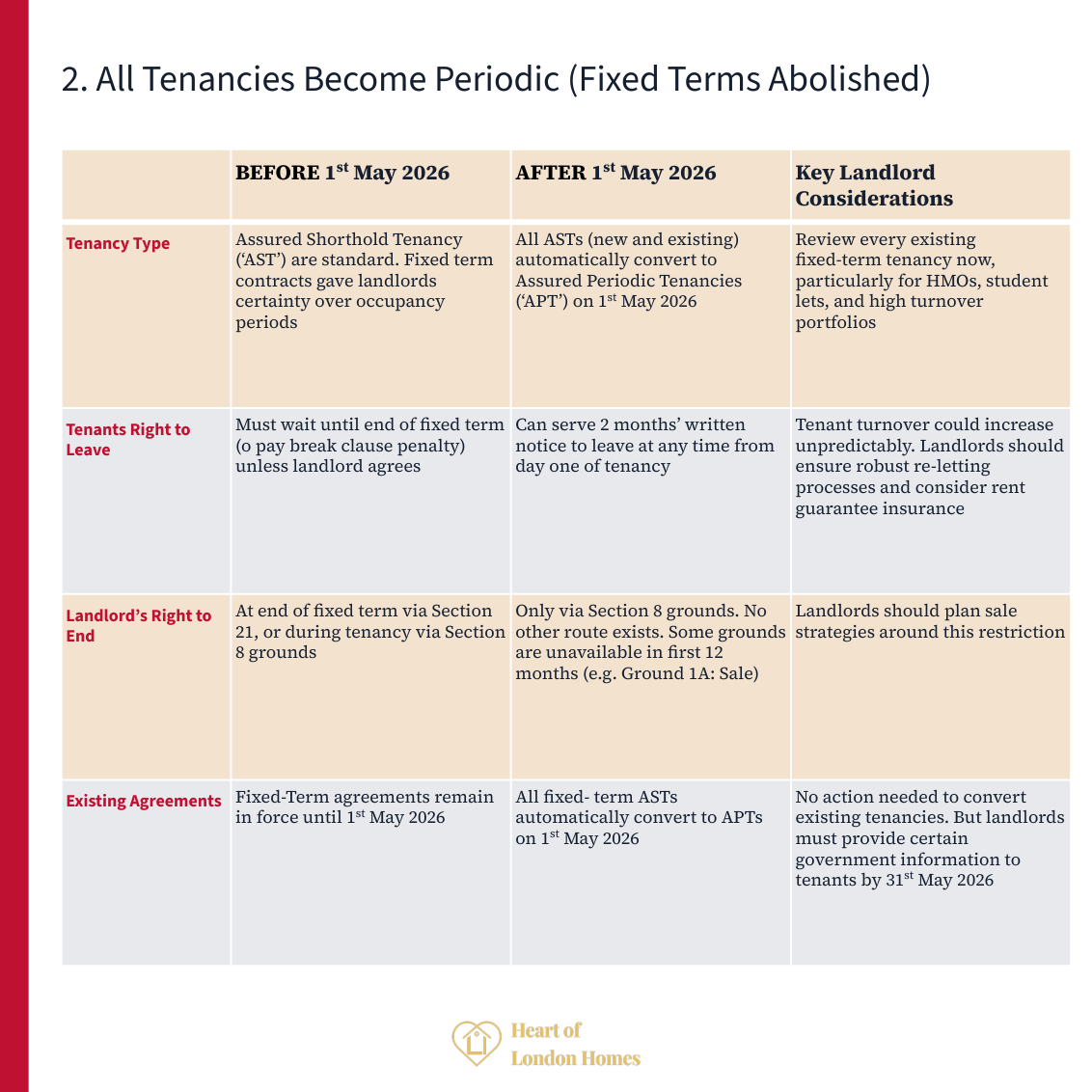
From 1 May 2026, all assured shorthold tenancies (ASTs) automatically become periodic tenancies — no new agreement is needed. Fixed-term clauses cease to have effect, and tenants can leave with 2 months' notice at any time. Landlords do not need to issue new contracts; the transition happens by operation of law.
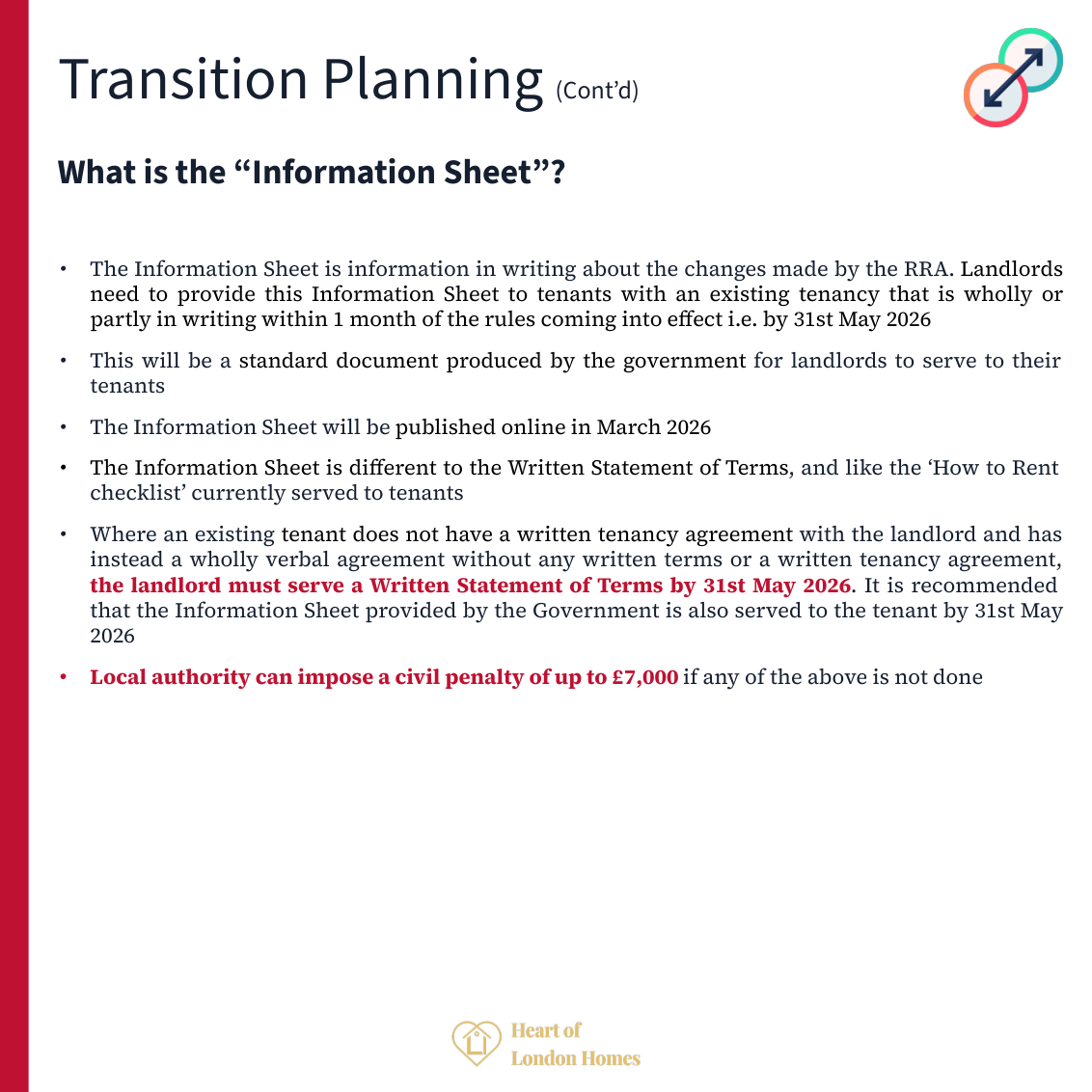
What is the Information Sheet landlords must serve?
Landlords must serve the government-issued Information Sheet to all existing tenants by 31 May 2026. New tenancies created from 1 May 2026 also require a Written Statement of Terms before signing. Failure to serve the Information Sheet prevents landlords from serving a valid Section 8 notice.
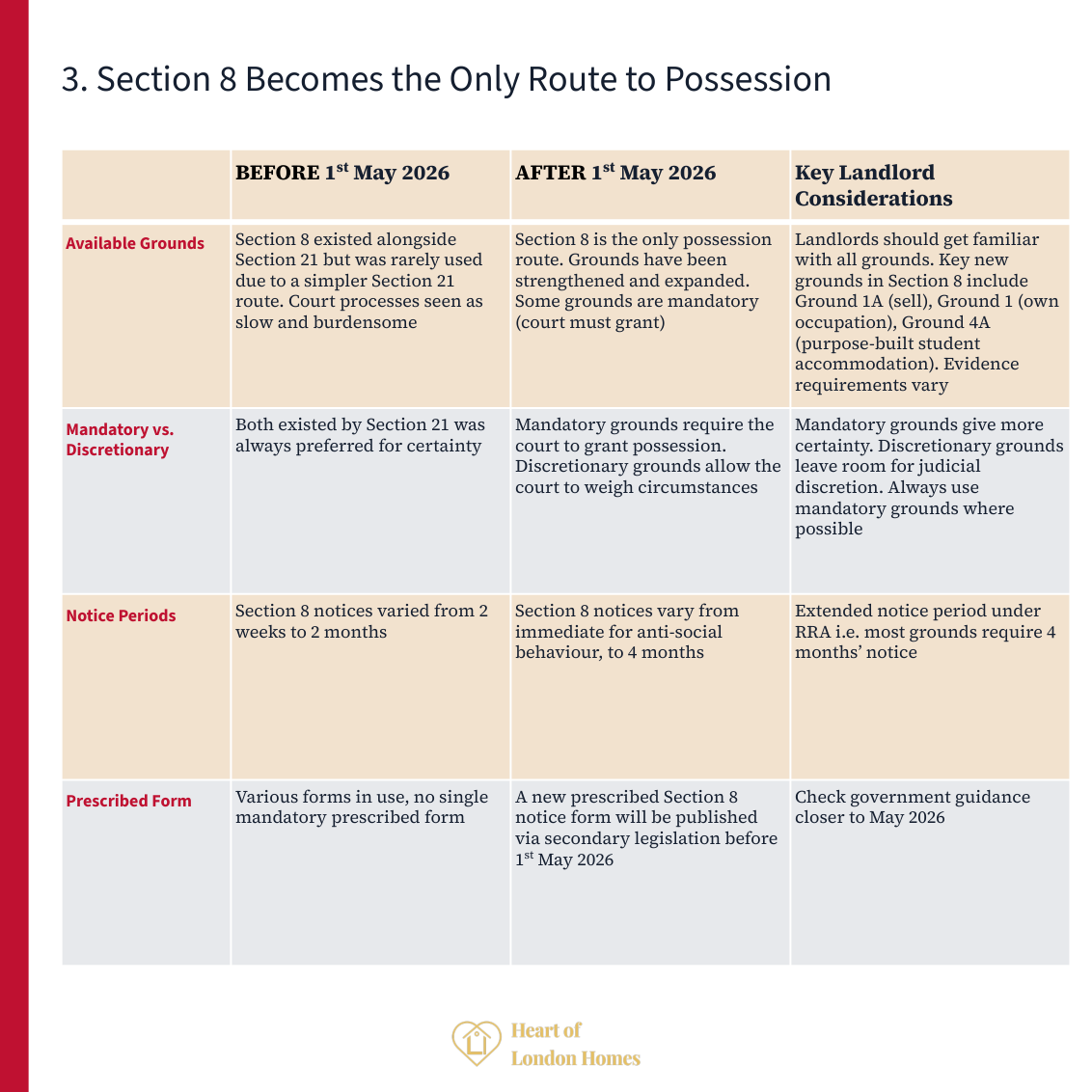
Is Section 21 being abolished?
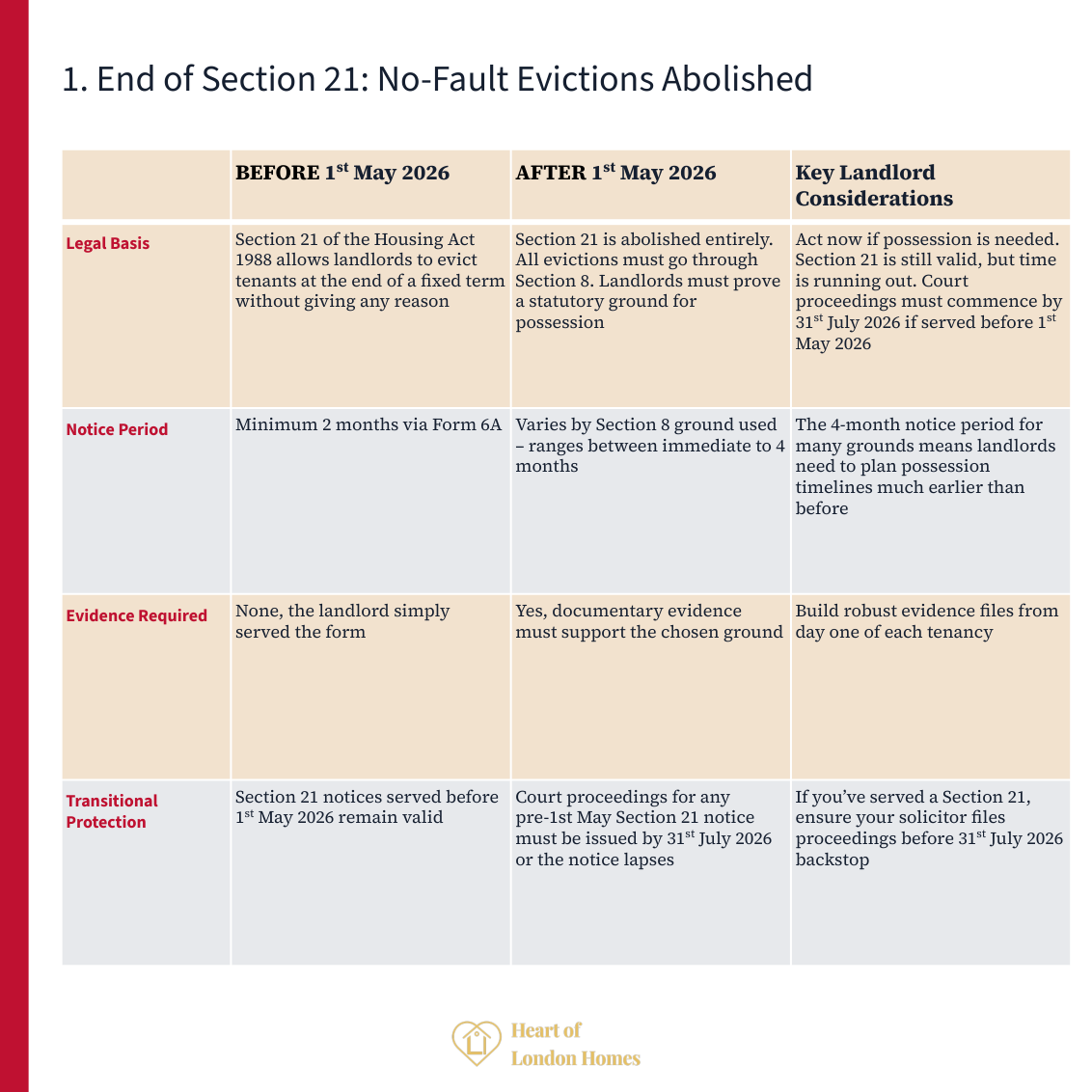
Yes. Section 21 no-fault evictions are abolished from 1 May 2026. All evictions must go through Section 8, which requires a valid ground for seeking possession. Landlords who need to regain their property can use grounds such as wanting to sell (Ground 1A) or move in (Ground 1), but must provide 4 months' notice.
Are fixed-term tenancies being abolished?
Yes. All fixed-term tenancies convert to periodic tenancies on 1 May 2026. Tenants can leave with 2 months' notice at any time. Break clauses also become invalid. Quarterly rent periods automatically adjust to monthly.
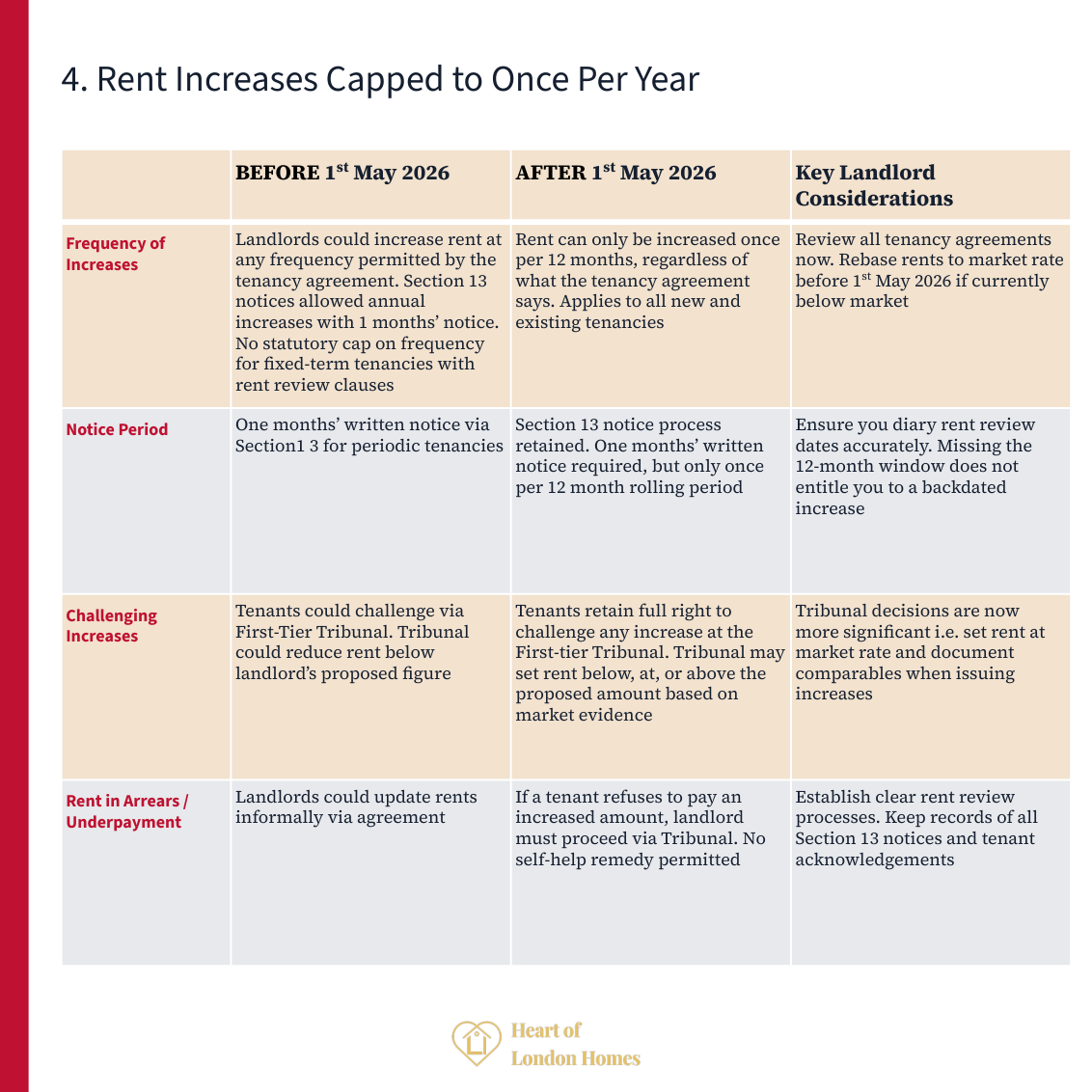
How often can landlords increase rent?
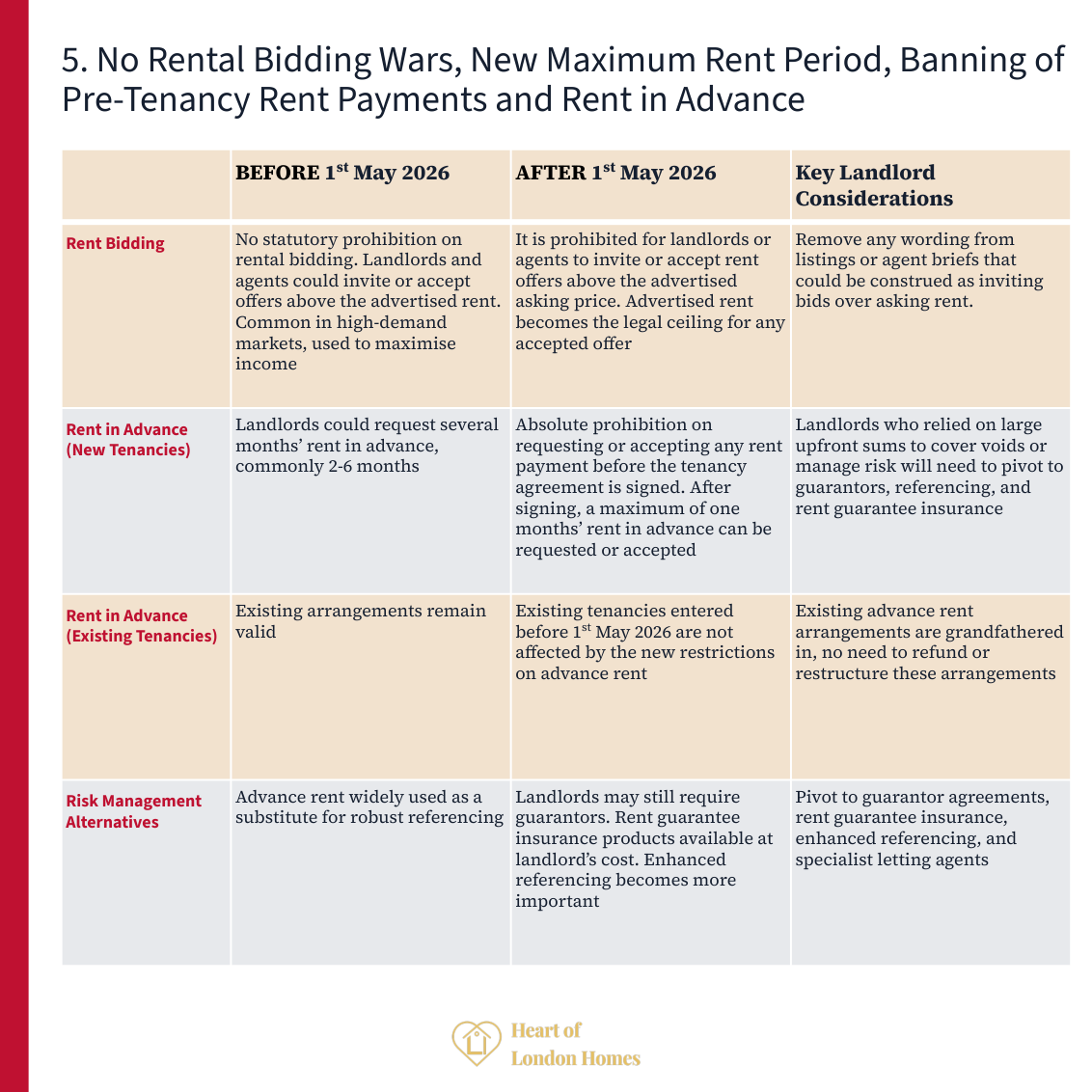
Rent increases are limited to once per year, with 2 months' notice required via Form 4A. Tenants can challenge above-market increases at a First-tier Tribunal. Rental bidding — asking for or accepting offers above the advertised rent — is also banned.
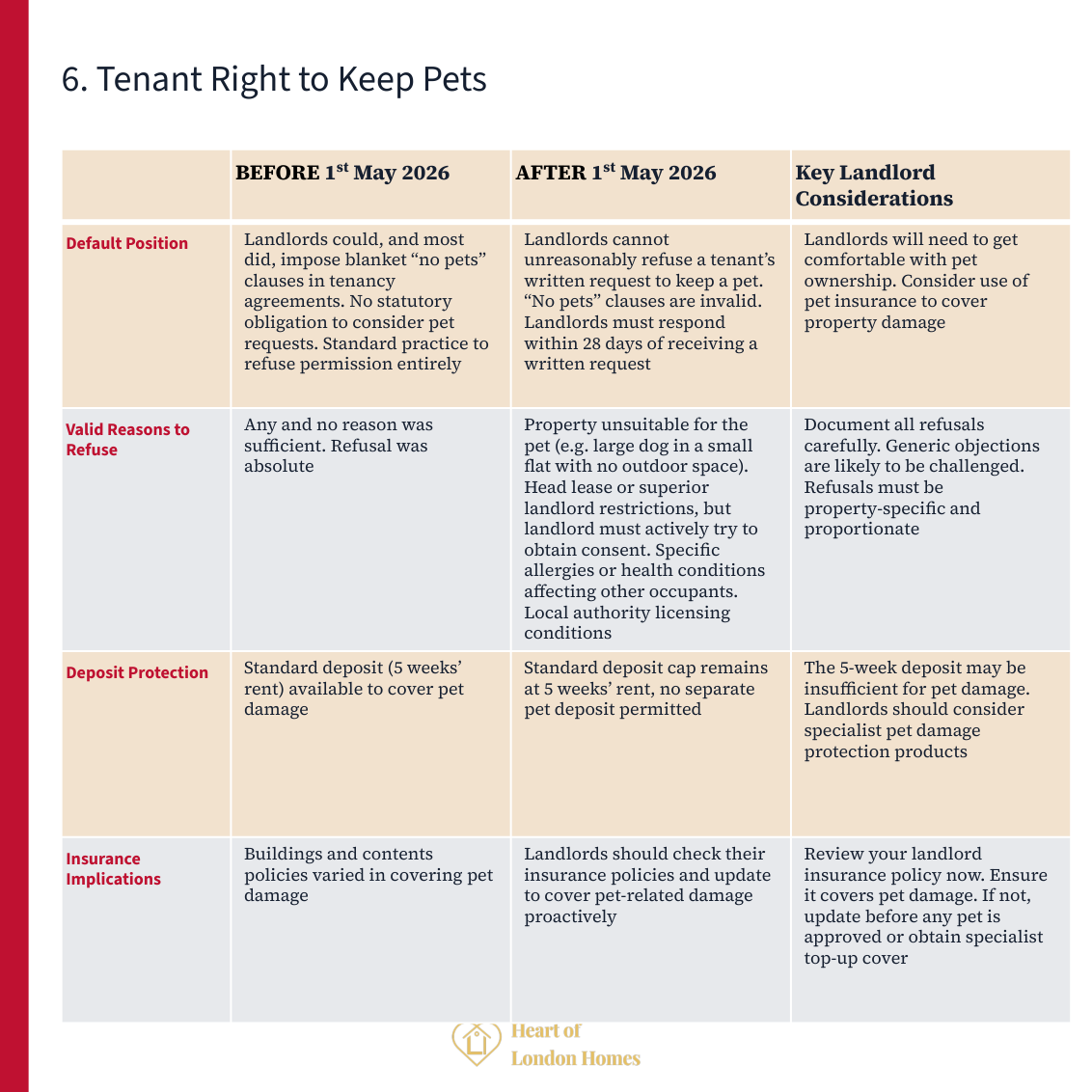
Can landlords still ban pets?
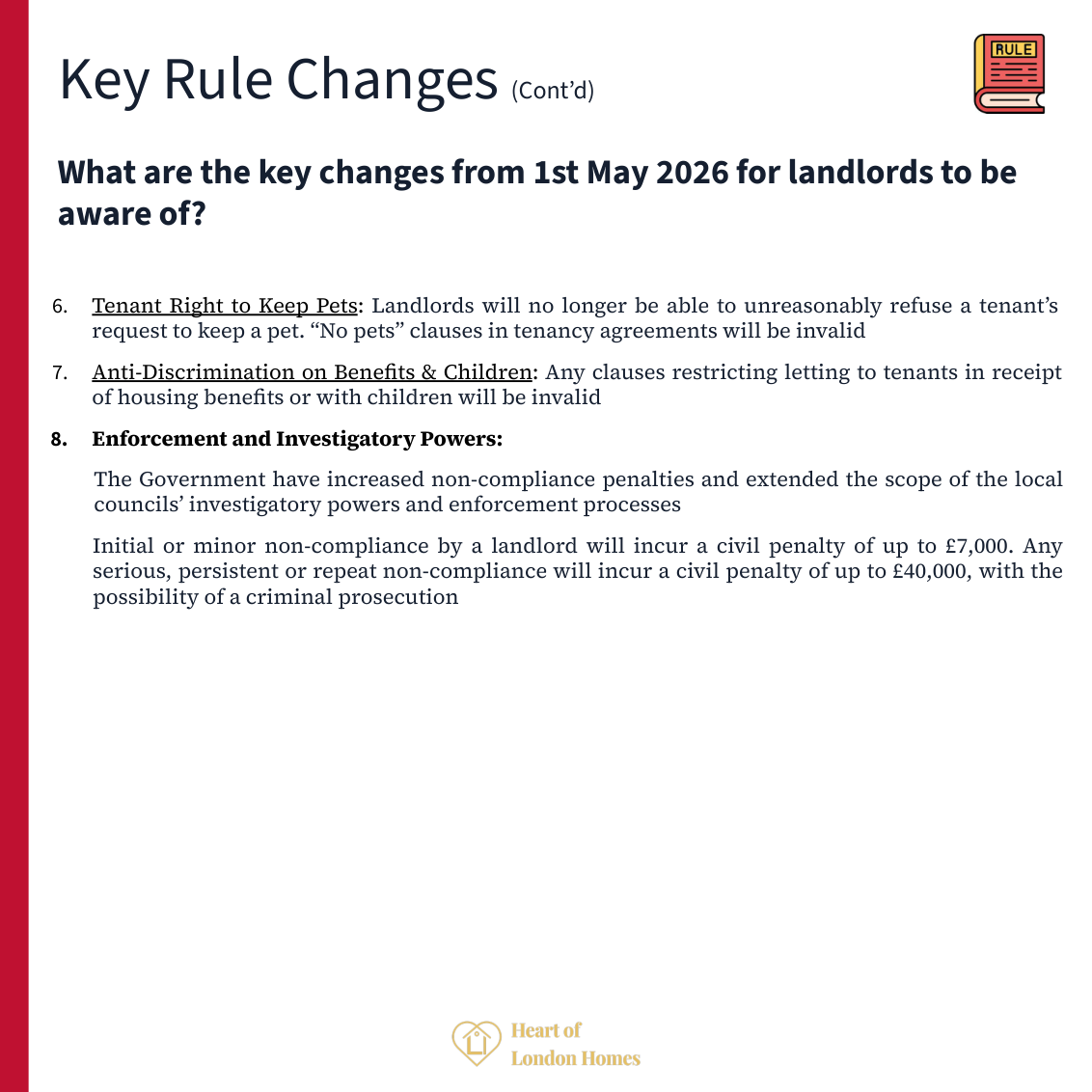
No. No-pets clauses become invalid from 1 May 2026. Landlords must respond to pet requests within 28 days and can only refuse on reasonable grounds. Tenants may be required to take out pet damage insurance to cover any additional risk.
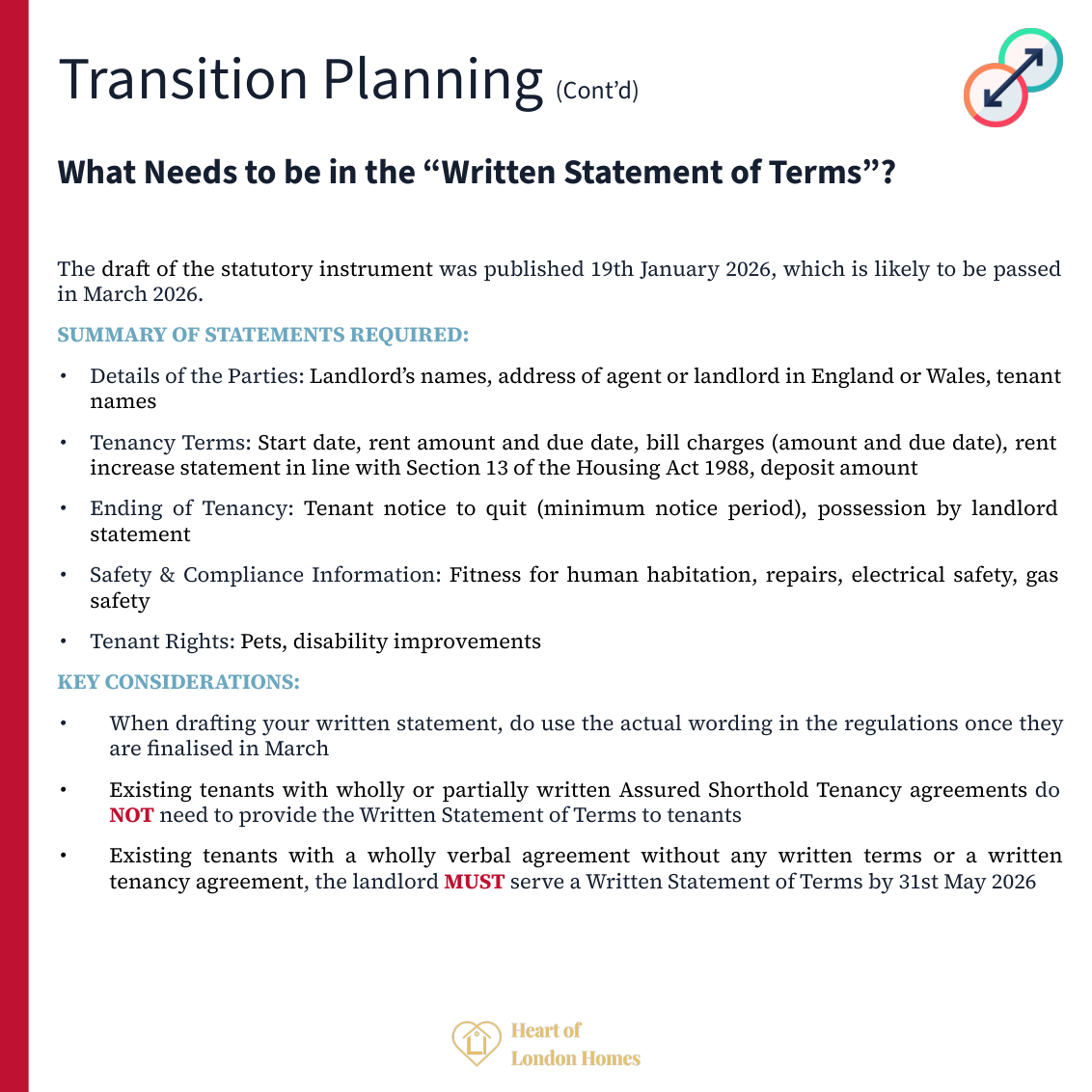
What tenancy clauses become invalid from 1 May 2026?
Fixed-term clauses, Section 21 clauses, no-pets clauses, and break clauses all become invalid. Quarterly rent periods automatically adjust to monthly. Landlords should review their tenancy agreements but do not need to re-issue them — the invalid clauses simply cease to have effect.
What is the Landlord Database and when is it required?
The Landlord Database is a national register of private landlords. Registration is expected to become mandatory from late 2026. A private rented sector ombudsman scheme is planned for 2028. Both are intended to improve transparency and accountability in the sector.
Too many rule changes to keep track of?
We stay on top of every regulation so you don't have to. Full property management for London landlords at 6% — no exit fees.